Introduction
Brazil's space sector, once marked by early achievements in infrastructure and research since the 1960s, is now undergoing a strategic transition. Brazil possesses strong scientific foundations, a growing industrial base, and unique geographic advantages. However, the country's space sector also faces structural challenges, including fragmented governance, limited commercialisation pathways, and gaps in private capital mobilisation. To revitalize its space economy in the era of the New Space economy, Brazil is seeking to overcome domestic barriers and tap into new global and local opportunities.
In this context, UNOOSA, in collaboration with UNDP since November 2022, is providing specialized technical assistance to AEB. The project aims to strengthen the competitiveness of Brazil's space economy, enhance collaboration between public and private stakeholders, and foster integration between space and non-space sectors-ultimately contributing to broader socio-economic development for the country. The project is currently entering Phase III - implementation of recommendations.
From agriculture and climate resilience to connectivity and advanced manufacturing, space technologies can generate real value for people, communities, and industries. This project aims to ensure these opportunities translate into tangible benefits across society.
Objectives
This project aims to strengthen the competitiveness and resilience of Brazil's space ecosystem by enhancing institutional capacity, fostering commercialisation and innovation, expanding international engagement, and increasing cross-sector adoption of space solutions to drive sustainable economic growth and national development.
Implementation
The Space Economy project in Brazil is guided by a collaborative strategy that emphasizes close partnership with AEB, engagement with local experts, and the integration of international best practices.
Phase I focuses on laying the groundwork by assessing the current state of Brazil's space economy and strengthening institutional capacity. Key activities include an online course on the foundations of the space economy - a masterclass designed for AEB staff to deepen understanding of global trends and evolving space agency roles - and a comprehensive research report on Brazil's space sector.
Phase II builds on these insights through an in-person national workshop that brings together key stakeholders from across the Brazilian space ecosystem. This workshop facilitates discussion on current challenges, explores emerging opportunities, and collects input to shape strategic recommendations. Applying the UNOOSA Space Economy and Ecosystem Development (SPEED) framework, a strategic roadmap for the Brazilian space ecosystem that is aligned with Brazil's national priorities and the vision for its space programme is formulated. A workshop was held in Brasilia to communicate the findings and recommendations and secure buy-in from stakeholders.
Phase III focuses on implementing the roadmap through five high-impact, immediate interventions designed to strengthen commercialisation, internationalisation, and the competitiveness of Brazil's space sector. These actions address critical gaps, generate early momentum, and produce visible results while broader reforms advance. Together, they create a coordinated push that enhances institutional readiness, supports entrepreneurs, and lays the groundwork for long-term sustainable growth.
Strategic Roadmap for the Brazilian Space Ecosystem
A Roadmap Built with Brazil, for Brazil
As a central output of this project, UNOOSA and AEB developed the Strategic Roadmap for the Brazilian Space Ecosystem - a long-term vision for how the country can grow, innovate, and lead in an increasingly competitive global environment.
The roadmap outlines a clear vision to strengthen Brazil's space ecosystem through better governance, commercialisation, international partnerships, talent development, and cross-sectoral innovation. Developed through extensive consultations and evidence-based analysis, the process ensured national ownership, broad participation, and a shared understanding of Brazil's opportunities and challenges-crucial foundations for subsequent successful implementation. The roadmap identifies priority actions across nine focus areas phased across short-, medium- and long-term, offering a realistic plan that balances ambition with practicalities to guide Brazil's long-term growth.

Objectives
The roadmap addresses three overarching objectives:
-
Commercialisation of Space Activities
Establish the conditions necessary to enable the emergence and scaling of space-linked ventures, particularly those addressing immediate national needs in agriculture, connectivity, environmental monitoring, and other data-intensive domains. This includes lowering entry barriers for startups, strengthening downstream applications, improving access to risk-tolerant capital, and creating an innovation- and business-friendly ecosystem. -
Internationalisation and Strategic Positioning
Position Brazil as a credible and competitive actor within the global space economy by leveraging its geographical advantages - such as its proximity to the equator and existing infrastructure at Alcântara - as well as its scientific and technical diaspora. This includes deepening international partnerships, improving ecosystem visibility, expanding overseas markets, attracting foreign investments and fostering global co-incubation mechanisms. -
Synergies Between Space and Non-Space Sectors
Strengthen the integration of space capabilities into key non-space industries and policy domains - such as agriculture, climate resilience, and natural resource management - through capacity building for high-level decision makers, targeted public-private collaborations, procurement programmes, and pilot applications. By embedding space-based services into national priorities, Brazil can maximise societal returns and stimulate demand-driven innovation. Designed as a roadmap for AEB, this report can also serve as a reference for federal and state authorities, industry, research institutions, innovation actors, and development partners seeking to contribute to the sustainable growth and strategic positioning of the Brazilian space economy. The roadmap aligns closely with Brazil's national strategies and international commitments, including the SDGs and the Space2030 Agenda.
Designed as a roadmap for AEB, this report can also serve as a reference for federal and state authorities, industry, research institutions, innovation actors, and development partners seeking to contribute to the sustainable growth and strategic positioning of the Brazilian space economy. The roadmap aligns closely with Brazil's national strategies and international commitments, including the SDGs and the Space2030 Agenda.
Roadmap Development Approach
The roadmap was produced through a rigorous, evidence-based and consultative process:
- ~30 interviews with national and international stakeholders
- A two-day Space Industry Workshop and focus groups in April 2025
- Analysis of national policies, international benchmarks, and global market studies
- Application of UNOOSA's Space Economy and Ecosystem Development (SPEED) framework
- Integration of eight guiding principles, including national ownership, inclusivity, policy coherence, good governance, and sustainability
This approach ensured broad participation, national ownership, and recommendations grounded in real economic, institutional, and technical insights.
Nine Focus Areas
The roadmap outlines nine interconnected strategic domains that together shape Brazil's long-term space ambitions:
- AEB Organisational Role & Structure
- Policy & Governance
- Commercialisation & Innovation
- Internationalisation
- Cross-Sectoral Synergies & Applications
- Space Ecosystem, Hubs & Startups
- Private Capital & Public Investment
- Human Capital & R&D
- Outreach, Communication & Society
Across each focus area, interventions were evaluated using a Risk × Worthiness Matrix, prioritising actions with the highest impact and highest consequence of inaction.
Priority Interventions to Build Momentum
To build momentum, the roadmap identifies five high-impact actions for implementation in the first year:
-
National incubator and accelerator programme
Creating a pipeline of innovative companies ready for investment and growth, including educational resource for space entrepreneurship.
-
National framework to measure the economic contribution of space activities
Providing clear evidence of the value space brings to Brazil's economy.
-
A stronger Brazilian Space Industry Catalogue
Helping companies connect, collaborate, and expand their visibility.
-
Executive training for industry leaders
Increasing awareness of how space solutions can support agriculture, energy, climate, logistics, and other key economic sectors
-
Feasibility study for a Special Economic Zone for space
Exploring how an optimised regulatory and business environment could boost competitiveness and attract foreign investments.
These initiatives are designed to deliver quick wins while enabling deeper structural reforms and long-term competitiveness.
Outputs
The roadmap delivers:
- A strategic vision for Brazil's space economy
- Clear priority actions across short, medium, and long term
- Evidence-based recommendations aligned with national plans
- A multiyear implementation timeline
- A framework for stakeholder coordination and institutional strengthening
- Pathways for commercial growth, international integration, and cross-sector innovation
Together, these outputs position Brazil to leverage space as a catalyst for socioeconomic development, scientific advancement, and global engagement.
Roadmap Capacity Building Workshop
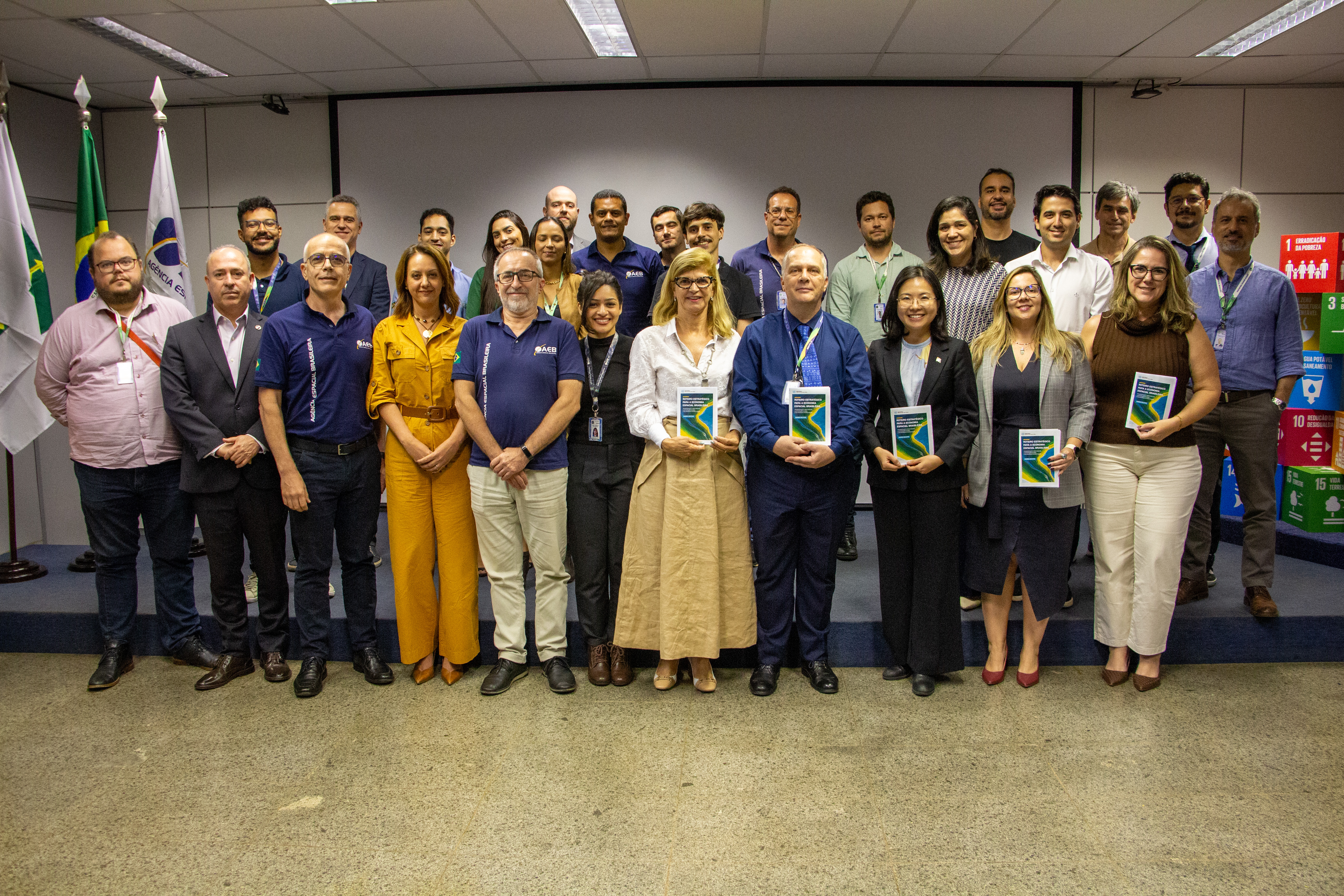
This workshop marked a pivotal step in transforming the Strategic Roadmap into action by equipping AEB staff with the knowledge and confidence needed to advance its implementation. Securing strong staff buy-in and a shared understanding of the roadmap's vision is essential for turning it into a practical tool to strengthen Brazil's space ecosystem and deliver long-term national benefits.
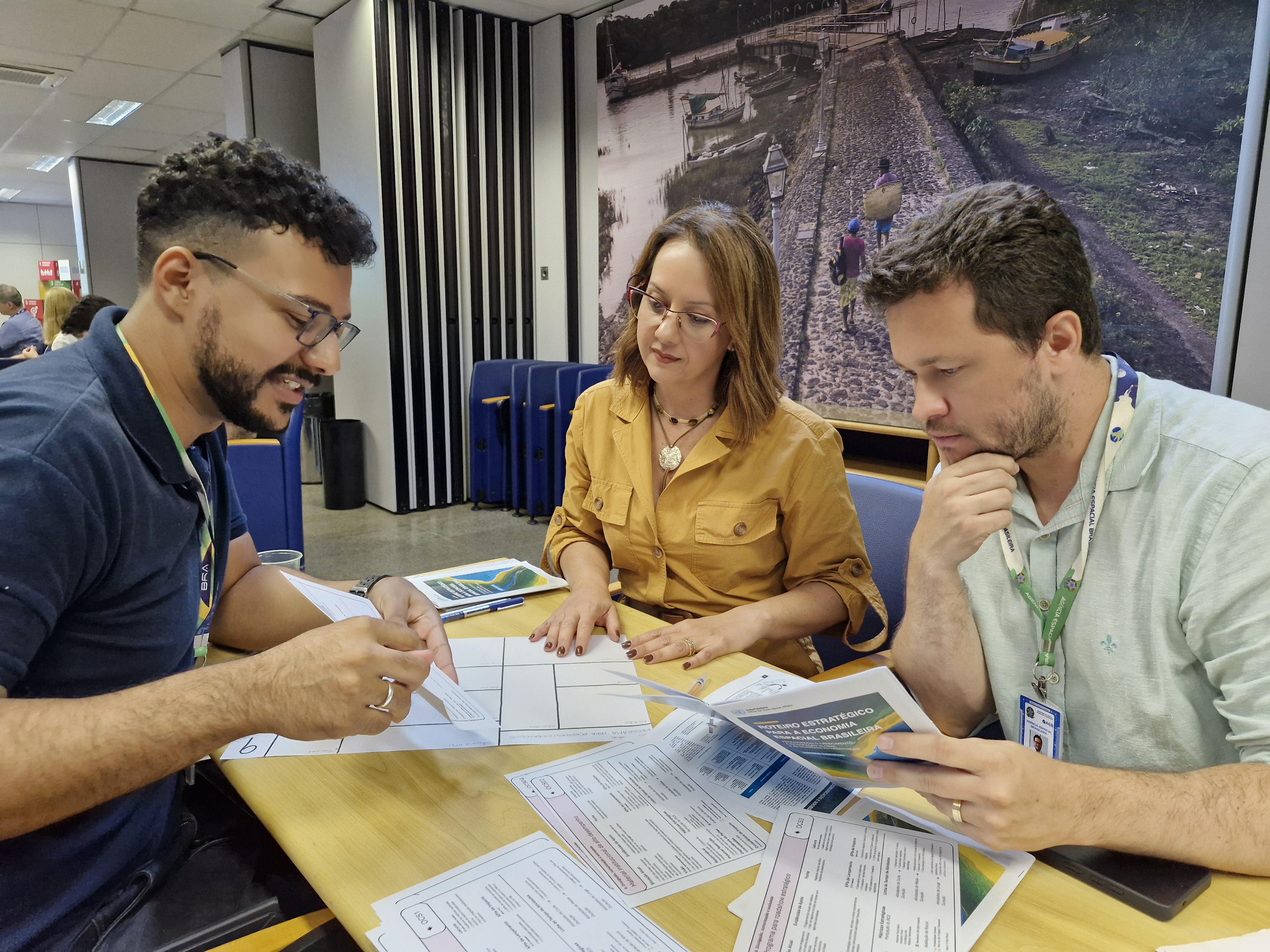
To support this, UNOOSA and AEB organized a dynamic two-day capacity-building workshop on 1-2 December 2025. The programme introduced staff to the roadmap's methodology, analytical foundation, and key recommendations, highlighting its strategic relevance for Brazil's domestic sector ecosystem and evolving position in the global space economy. Through interactive discussions and a hands-on group exercise using a Kanban-inspired approach, participants generated concrete insights to refine the roadmap and identify priority actions and capacity-building needs.
The workshop stimulated critical reflection, built ownership among staff, and clarified the skills, tools, and partnerships required for effective implementation. Its outcomes establish a solid basis for sustained progress and collective momentum within AEB, ensuring that the roadmap serves as a living instrument for national impact.
Space Economy Report
Based on a series of stakeholder interviews and expert contributions, this comprehensive research aims to provide enhanced insight into the current state of Brazil's space economy while fostering a deeper awareness of the systemic factors influencing its future trajectory. This report offers an in-depth analysis of Brazil's space ecosystem, examining key industry segments, technological capabilities, market dynamics, and the role of enabling infrastructure, with a particular focus on the intricate interdependencies among its key stakeholders. Finally, the report identifies critical challenges and opportunities, laying the groundwork for the next phase of the project that will guide the development of a strategic roadmap to create a resilient, competitive and sustainable space economy in Brazil.
Industry Collaborations
First Space Industry Workshop
With technical support from UNOOSA, AEB hosted the inaugural Space Industry Workshop in São Paulo from 2 to 3 April 2025. The workshop brought together over 100 international and national experts and participants to promote the growth of the Brazilian space sector by fostering greater commercialization, international collaboration, and integration of the space sector with non-space industries, creating new businesses and technological opportunities.
The workshop was specifically tailored for stakeholders and decision-makers from key economic sectors, who may not yet be fully aware of how space applications can benefit their businesses. The workshop demonstrated how space technologies can drive innovation, improve competitiveness, and create new business opportunities across industries. A highlight of the event was the dynamic combination of focus group sessions and a high-level plenary, which created a strong feedback loop to consolidate ideas, address common challenges, and develop actionable recommendations. These outcomes will directly inform the strategic roadmap for Brazil's space economy, advancing the country's vision for a more integrated, commercially driven, and globally connected space sector.
To find more information about the event and the presentations
click here
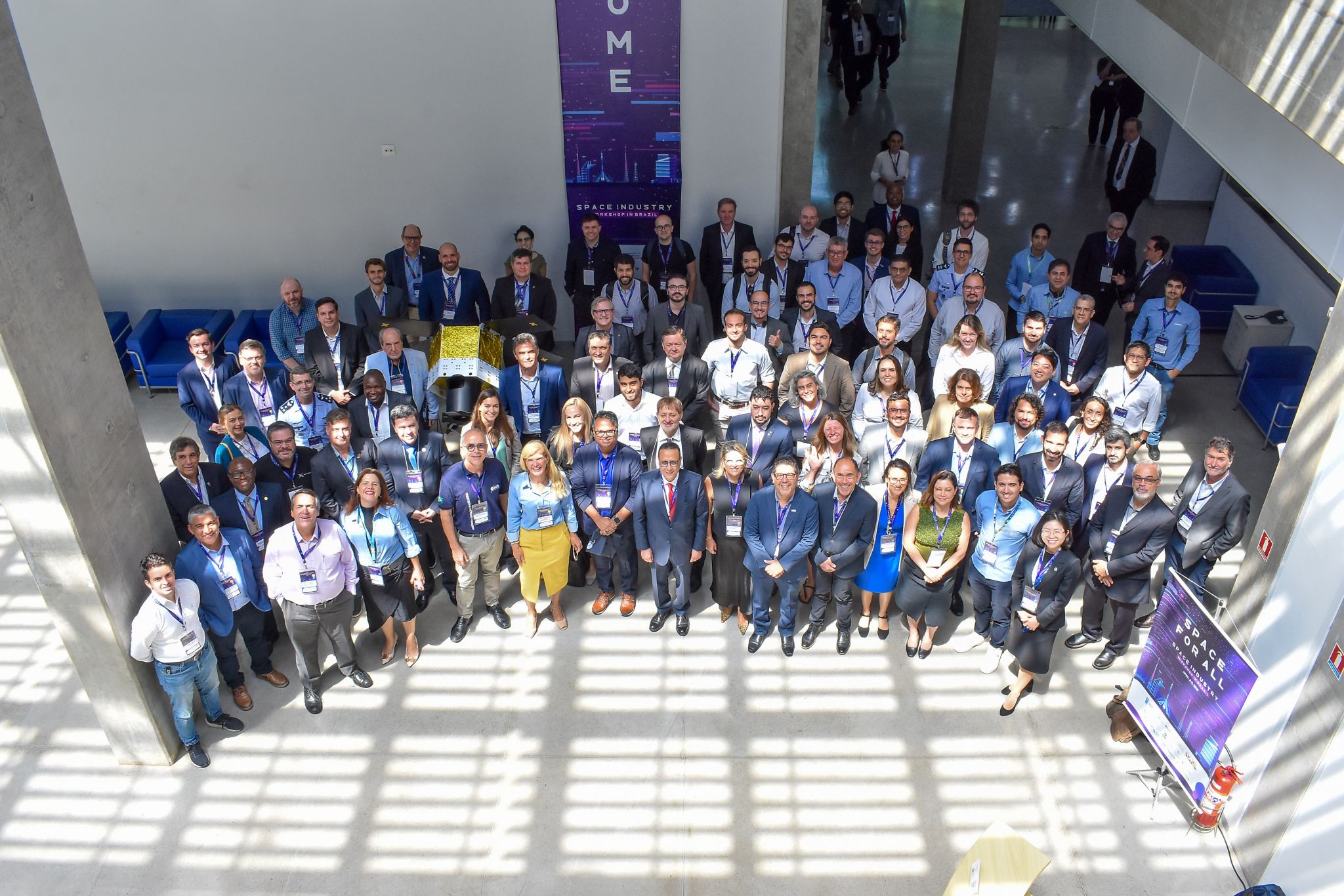
"This was a first for Brazil in space, we've never had a truly international event like this here. I learned about the possibilities of investment in space!" - workshop participant
Trainings
Space and Climate Masterclass: Preparing AEB for Engagement in Global Climate Action
In October 2025, UNOOSA held a six-hour online Masterclass for the Brazilian Space Agency and relevant stakeholders to strengthen climate governance knowledge and highlight the role of space in climate action. The training supported Brazil's preparation for COP30, covering UNFCCC and COP processes, national climate commitments, and space sector contributions, while equipping participants with practical skills and strategic insights on how AEB can leverage its space expertise to advance climate adaptation and mitigation-and how the climate agenda can, in turn, serve as a catalyst for expanding Brazil's space ecosystem.
Space Economy Masterclass: Brazil in Focus
In September 2024, UNOOSA organized a 2-day Online Masterclass for the staff of the Brazilian Space Agency to broaden knowledge of the foundational concepts of space economy and develop enhanced capabilities for catalyzing and enabling the national space economy. Participants benefited from tailored active learning activities prepared by the Oxford Saïd Business School, ESA, and other speakers, nurturing analytical skills and fostering an entrepreneurial spirit and transformative mindset for growing the Brazilian space economy.
Introduction to the Space Economy
The space sector is a game-changer for society. While the total value of the space economy is growing at a faster rate than the global GDP, investments and innovation in this unique sector keep delivering a wealth of opportunities for sustainable development. Taking this course will empower you to:
① Broaden your horizons about one of the key sectors for our future
② Find commercial opportunities in and from space
③ Understand how space sustainability powers sustainability on Earth
④ Become a space advocate
Learn more about one of the most exciting domains shaping the future of humanity on planet Earth and beyond!
Work in progress
The project is currently entering Phase III - implementation of recommendations.