Space 4 Climate Action

Background
Since the first satellite to provide measurements of Earth's atmospheric temperatures was launched in 1969, space assets have been increasingly key for climate monitoring - and today, for climate action. Earth observation data have been central to the formulation of the scientific consensus on the nature and magnitude of climate change. More than half of the Essential Climate Variables (characterizing Earth's climate) can be monitored from space and help inform mitigation strategies.
Meanwhile, space-enabled capabilities such as satellite communications and geo-spatial positioning are helping adapt and become resilient to climate change. Applications of space research and cutting-edge technologies developed for space exploration are also diffusing into society and industries, and offer new means for action.
As more and more actors get involved and projects get started to provide space-enabled climate services, there is a growing need for awareness-raising, information-sharing and coordination to realize the full potential of these capabilities.
Vision
As part of its efforts to support Climate Action, the United Nations Office for Outer Space Affairs (UNOOSA) is maintaining this website dedicated to informing on the use of space-based capabilities for climate action and orienting towards adequate actors and resources. The Space4Climate Action website offers capacity-building resources targeted to everyone - citizens, organizations, companies, universities, policymakers or experts - to inform your own strategy development or research and gain a more complete understanding of the current efforts.
Climate Action
Climate change is a complex crisis with effects felt globally, at all levels. It primarily results from anthropogenic emissions from human activities, altering the composition of the atmosphere globally, and is combined with natural climate variability. According to the 2022 Assessment Report issued by the Intergovernmental Panel on Climate Change ( IPCC), human-induced climate change is creating serious and widespread disturbance in nature, impacting the lives of billions of people worldwide.

"Climate Action" is Sustainable Development Goal 13 of the United Nations, i.e. taking "urgent action to combat climate change and its impacts" and is associated with the following main targets:
13.1 Strengthen resilience and adaptive capacity to climate-related hazards and natural disasters in all countries;
13.2 Integrate climate change measures into national policies, strategies and planning;
13.3 Improve education, awareness-raising and human and institutional capacity on climate change mitigation, adaptation, impact reduction and early warning;
At the international and national levels, a number of policies, frameworks, technical and coordination mechanisms aim at supporting stakeholders in their strategic decision-making related to climate action. For instance, the United Nations Framework Convention on Climate Change (UNFCCC) is the primary international, intergovernmental forum for negotiating the global response to climate change. At its 2015 United Nations Climate Change Conference (COP21) in Paris, world leaders reached a breakthrough to tackle climate change and its negative impacts with the Paris Agreement, which sets long-term goals to guide all nations:
- To substantially reduce global greenhouse gas emissions to limit the global temperature increase in this century to 2 degrees Celsius, while pursuing efforts to limit the increase even further to 1.5 degrees
- To review countries' commitments every five years
- To provide financing to developing countries to mitigate climate change, strengthen resilience and enhance their ability to adapt to climate impacts
The Agreement, which has been joined by 192 countries plus the European Union, includes commitments from all countries to reduce their emissions and work together to adapt to the impacts of climate change, and calls on countries to strengthen their commitments over time. The Agreement provides a pathway for developed nations to assist developing nations in their climate mitigation and adaptation efforts while creating a framework for the transparent monitoring and reporting of countries' climate goals. Every five years, each country submits an updated national climate action plan - known as its Nationally Determined Contribution (NDC) - within which countries communicate actions they will take to reduce their GHG emissions and reach the goals of the Paris Agreement. Countries also communicate in the NDCs the actions they will take to build resilience to adapt to the impacts of rising temperatures.
Space Technologies and Applications
Read more in the dedicated webpage
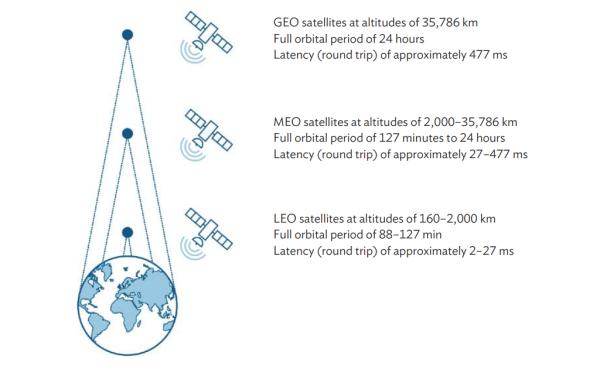
When it comes to climate action, the unique viewpoint of the planet available from Earth orbits allows for global coverage and accurate monitoring of changes at different scales. It is highly beneficial for monitoring climate change, mitigating its causes, helping adapt to its consequences, and finally supporting society to become more resilient. Earth observation satellites are, for instance, able to monitor changes in the atmosphere and on Earth's surface at a spatial resolution of a few dozen meters to a few dozen centimetres, depending on the type of sensors used. Compared to other types of hardware, such as airplanes, balloons or drones, satellites allow for a much more extensive coverage for much longer.
A satellite on an orbit similar to the International Space Station (ISS) - about 400 km - completes about 16 rotations around the Earth every day. Typical Earth observation constellations in low Earth orbit (LEO) - below 2000 km - are nowadays able to capture a complete coverage of the Earth in less than a few days, while Earth observation constellations in geostationary orbit (GEO) - about 36,000 km - have constant global coverage. Similar advantages in terms of global coverage and efficiency can be noted in satellite-based communications and satellite-based navigation.
Thanks to these capabilities, about 60 % of the 54
Essential Climate Variables can be monitored from space: land and ocean temperatures, water vapour, aerosols, greenhouse gases, ozone, glacier levels, fires, sea levels, etc. From these indicators, climate models can be improved, extreme weather events can be forecasted, and many other climate-relevant actions can be facilitated.
In some cases, space activities beyond Earth's orbits can also be beneficial for climate action thanks to technology diffusion. Space is an extremely challenging environment for any system or human being, which explains why space technologies are often designed for low energy requirements, high robustness, high accuracy, and reusability, among other characteristics. These very characteristics can be beneficial on the ground, for climate action: solar panels, water filters, high-performance batteries, and others can be directly advanced by spin-offs stemming from space technology and research.

Earth observation satellites are by far the most impactful space technology for climate action. Earth observation satellites use remote sensing capabilities (long-distance detection of the physical characteristics of a system through radiation emission and reflection) to capture images of the Earth or gather other types of data about the atmosphere or about Earth's surface.
Geospatial positioning is an important capability for climate action as it is used to map areas on Earth and track changes (such as ice mass levels, or ground levels). It is also an enabler of numerous technologies important to mitigate causes of climate change or adapt to its consequences, from logistics networks to city mapping and agriculture optimization.

Communication satellites are key, for example, in emergency response, offering a reliable means of connectivity when ground communication infrastructures may be damaged or overloaded, enabling access to first-responders, connection for affected persons, SAR, logistics, imagery and resources to address a crisis locally.
Climate action can be broken down into four categories,
to each of which space technologies can contribute:
Monitoring
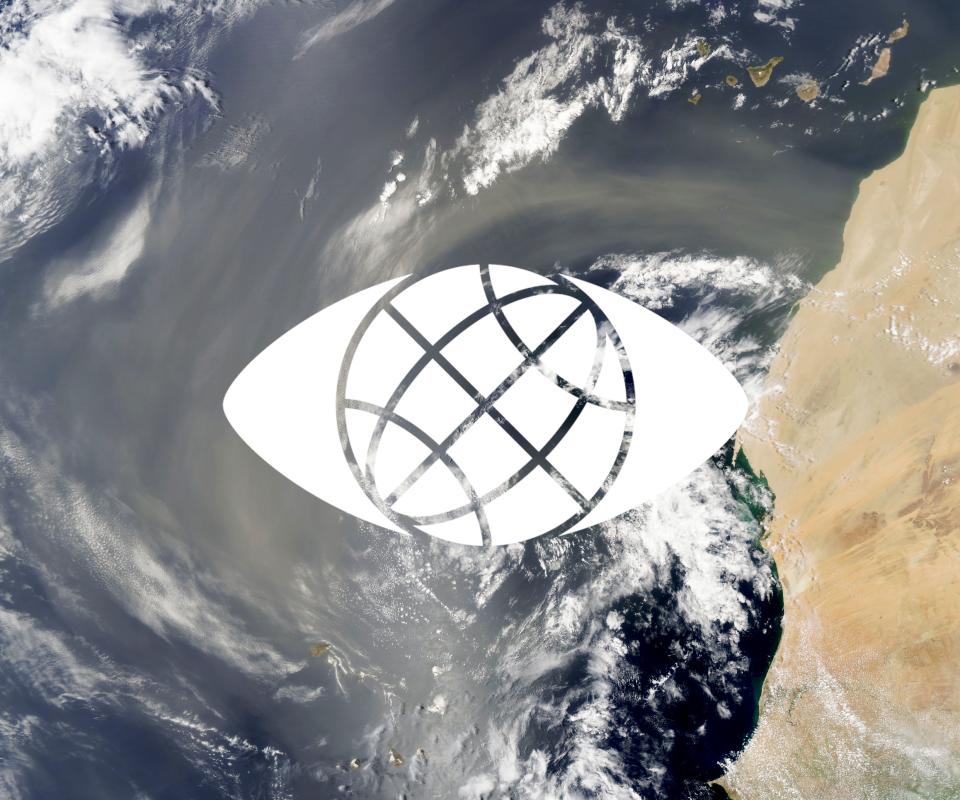
Climate change, as a complex and global issue, requires both refined and global monitoring capabilities. Satellites have proven to be instrumental in effectively and systematically characterising climate change. Monitoring allows for a better understanding of its causes and consequences. The resulting insights lead to better decisions by policymakers at local, regional, national, and global levels.
Mitigation

Space-derived data enhances the way humanity goes about its daily life, business, travel and much more. Satellite-enabled smart agriculture can help improve crop yields while reducing land use and inputs such as fertilisers, fuel or water. Satellite navigation enables more efficient logistics and supply chains, reducing emissions from the transportation sector. Earth observation supports the establishment of the optimal sites for wind or solar farms by monitoring wind speed and direction or estimating surface solar radiation.
Adaptation
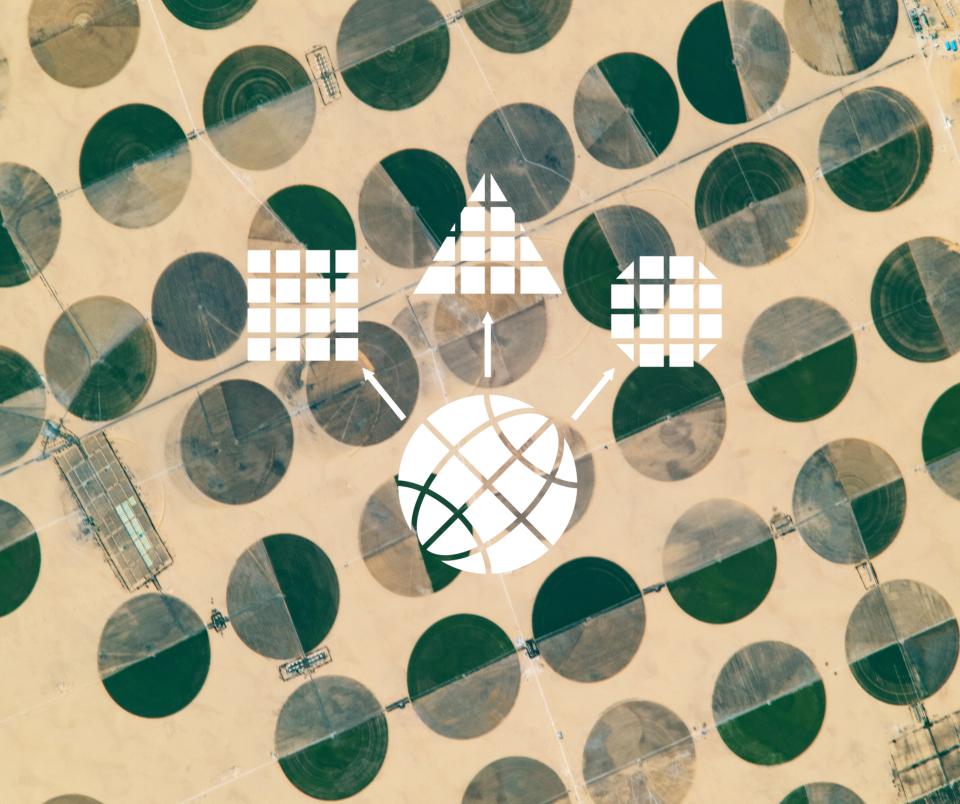
Space technologies contribute to climate adaptation through early-warning systems, monitoring of environmental changes, and better management of resources . Satellites provide crucial data for predicting extreme weather, managing water supplies, monitoring sea levels, and tracking changes in ice sheets and forests, which allows communities to better prepare for and respond to climate impacts.
Resilience

The increasing number and intensity of disasters exacerbate the need for resilience strategies, and space technologies are crucial in providing systematic and timely observations of variables necessary in decision-making and planning or recovery. Space technologies also play a significant role in building drought-resilient crops or revising land-use plans, improving the capacity of communities to cope with climate change impacts.